




CHILL LAB 超正常研究室 – 關注青少年的精神健康,讓參加者覺察及表達當下的情緒並調適自己

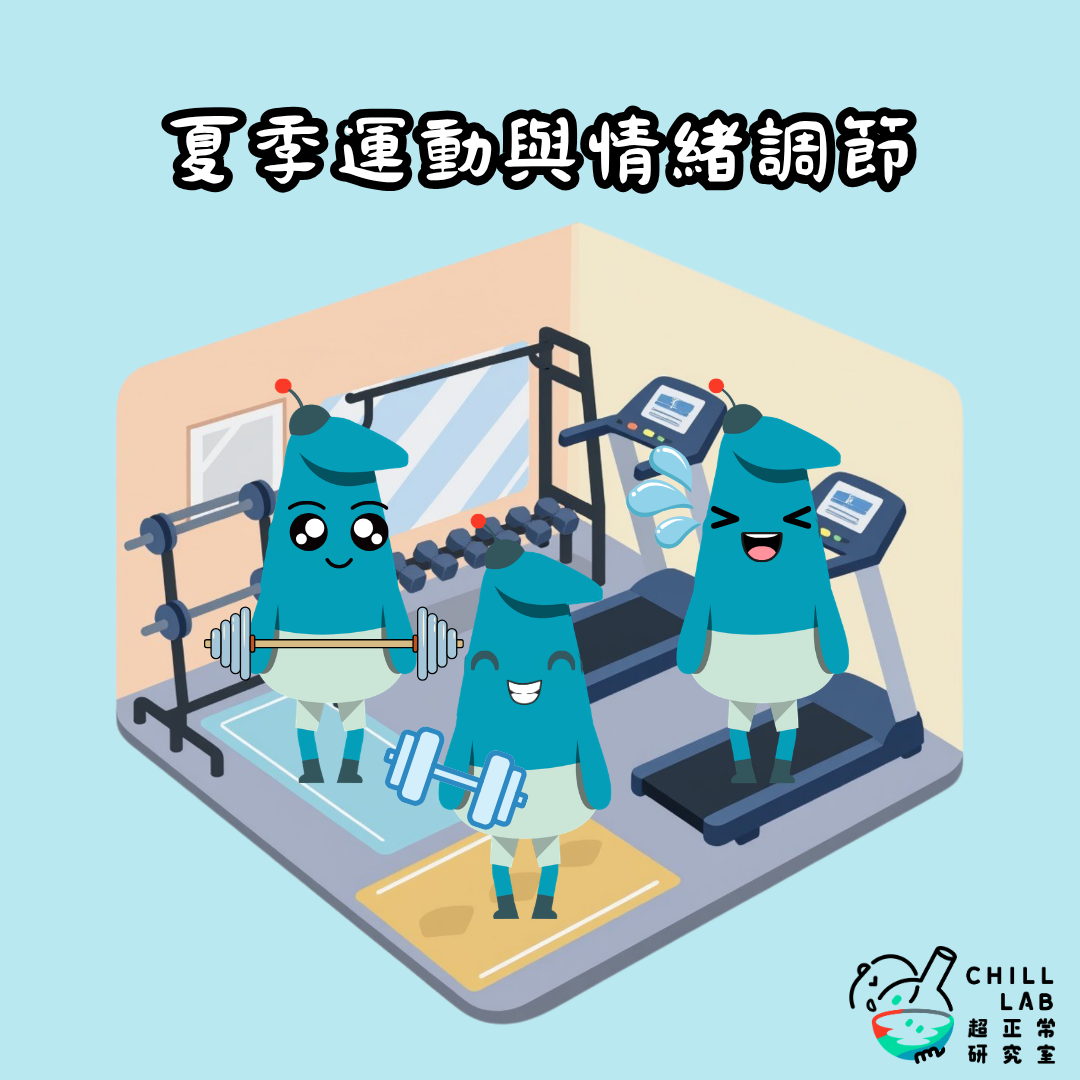
Summer Exercise and Emotional Regulation

Hot weather in summer can easily make us tired, and our mood may also become more irritable. Many people see these emotional ups and downs as a normal reaction to the weather, so they do not pay much attention to them. Rather than letting the external environment affect our mood, it may be better to take some time to move our bodies. Moderate exercise is one effective way to regulate emotions. When we keep up with regular physical activity, our bodies gradually develop a rhythm, and our mood can hence become more stable.

Exercise can help us release stress. When we do physical activities such as running or swimming, our attention shifts away from stress and toward the exercise itself. This allows us to forget the worries of school, work, or daily life temporarily. In addition, exercise can increase our happiness and help to keep our emotions more stable. When we stop dwelling on negative thoughts repeatedly, our body and mind can thus relax, and our mood can gradually become calmer.

The key to summer exercise is not only consistency, but also enjoyment. We can choose activities which we are interested in, such as , running, cycling, or yoga, and gradually build a habit. In this way, we can learn to release stress through exercise and improve both our emotional and mental well-being.

Summer exercise not only gives us a chance to care for ourselves in the middle of busy days, but also helps us learn healthier ways to regulate our emotions.

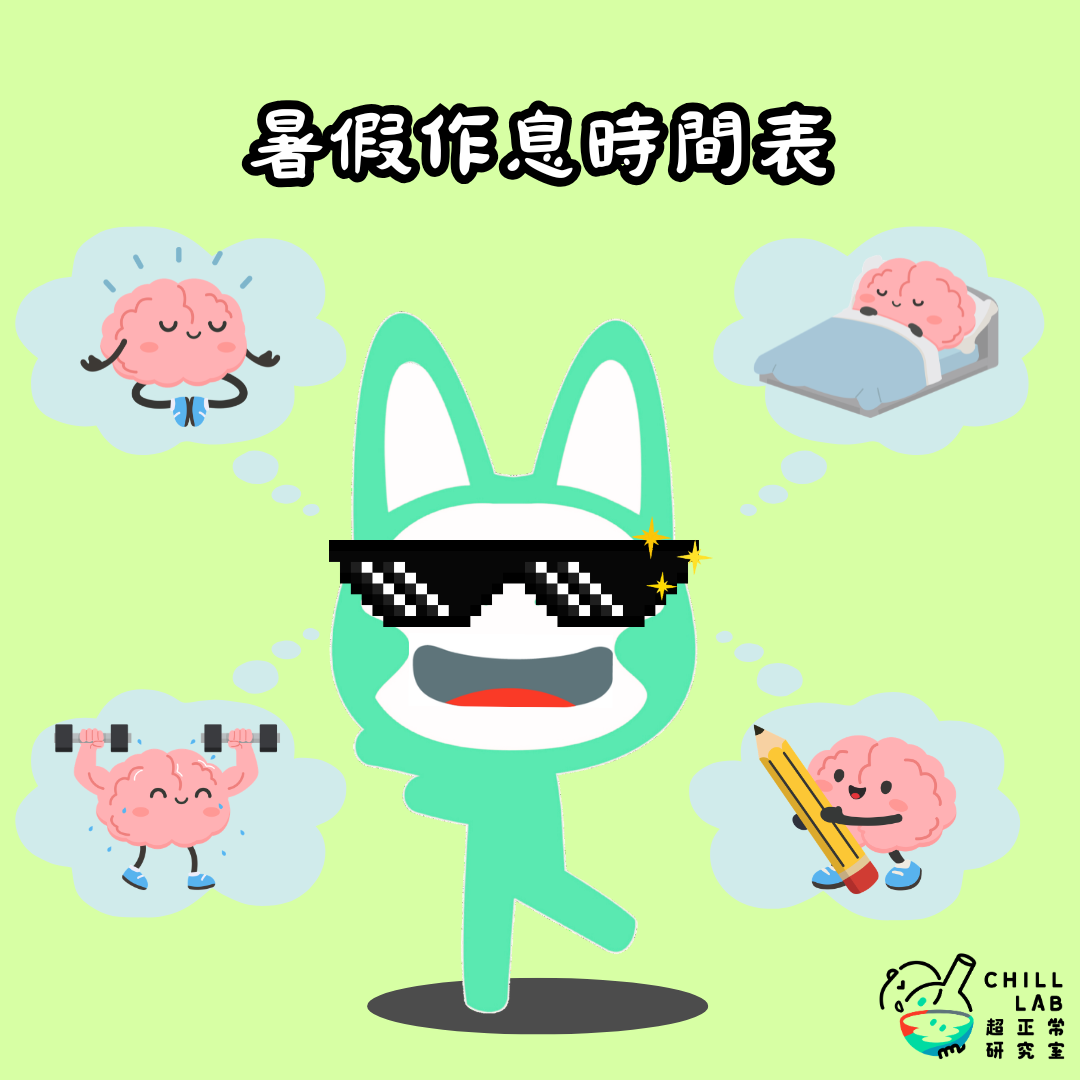
Summer Timetable

Summer is one of the most exciting times of the year for students. It gives everyone a chance to rest, relax, and take a short break from schoolwork, pressure, and worries. However, without proper planning, it is easy for students to become lazy and lose a sense of routine in daily life. In fact, summer is not only a time for rest, but also a chance to improve oneself and develop good habits. Students can create a summer timetable that suits their own needs and find a balance between relaxation and personal growth.

When planning a timetable, students can include study, relaxation, entertainment, and exercise. In the morning, as students are energetic, they can complete their holiday homework or do some reading. In the afternoon, students can take part in physical activities such as exercise or outdoor outings to help both body and mind relax. In the evening, they can set aside personal time or spend time with their family. This not only makes summer more meaningful, but also gives daily life more structure and rhythm.

Of course, a summer timetable does not need to be too strict. Simple and flexible arrangements can be added as needed. There is no single fixed format for a timetable, the most important thing is to create a plan that truly suits yourself and helps keep life balanced.

Summer is not about filling every minute, nor is it about letting time pass by idly. When we learn to find balance between study and relaxation, summer becomes more fulfilling and prepares us for the new school year, helping us move forward more steadily and further.

Rest Is for Going Further

In a society that values efficiency, we often think of “rest” as laziness and see “stopping for a while” as falling behind. Students face pressure from homework, exams, and further studies. Work, family, and responsibilities also chase adults. It seems as if life only needs to slow down one step, and we will lose everything. However, our emotions and bodies need regular care. Otherwise, one day, they may “break down.”

Rest is not running away. It is an ability to take care of ourselves. When we are tired for a long time, our emotions can easily become irritable and low. We may even lose interest in things we used to like. At this time, if we only blame ourselves for “not working hard enough,” the pressure will become even heavier. On the other hand, adequate rest can help our brain organize information, calm our emotions, and help us find the strength to face difficulties again.

For students, rest can be taking a walk after school, listening to music, or talking with friends. For adults, rest does not always mean taking a long holiday. It can be as simple as stopping for a few minutes a day and allowing ourselves to let go of the thought that “I must finish everything.”

A truly mature person is not someone who always forces themselves to keep going. Instead, it is someone who knows when they need to stop. When you feel tired, please do not deny yourself so quickly. You only need to regain your energy. Just like a long-distance runner adjusting their breathing during a race, this is not giving up. It is to run more steadily and go further.

Life is not a short race, but a long road. May we all learn to treat ourselves gently: do our best when we work hard, and rest peacefully when we are tired, because rest can help us move towards a better future with a clearer mind and firmer steps.

Summer Recharge Guide — Adding a Sense of Ritual to Life

Summer vacation is not only a time for rest but also a good opportunity to organize our bodies and minds and make a fresh start. After a long period of busyness, we may easily live in a hurried, chaotic way. Even when we are on holiday, we may still feel tired inside. At times like this, adding a little “sense of ritual” to daily life can help us rebuild our rhythm and feel more settled within.

A sense of ritual can be created through small, regular, and mindful actions that remind us, “I am taking care of myself.” For example, after washing up in the morning, we can drink a glass of water and write down one thing we would like to complete that day. Before going to bed, we can turn off our phones and reflect on a moment from the day that made us feel grateful. These simple actions can send clear signals to the brain: the day has begun, or it is time to rest well.

From a psychological perspective, stable daily rituals can increase our sense of control. When the external environment is full of change, small, fixed habits can make people feel safe and reduce anxiety. For students, losing their daily routine during summer vacation may make it harder to adjust when school starts again. If they can maintain a suitable balance between learning, exercise, and rest, their body and mind are more likely to stay balanced.

Understanding Fatherly Love, Understanding Life

Fatherly love is a deep and silent strength. Unlike maternal love, which is often delicate and tender, fatherly love expresses itself through boundaries, respect, and actions—opening the door to life for us. On this journey, fathers draw boundaries with restraint and sincerity, providing space for us to thoughtfully experience the world and to measure our dreams with our own feet.


Fatherly love is often shown through actions. This love acts as a bridge, allowing children to grow within freedom and boundaries, giving them wings to chase dreams while also providing stability.


Fatherly love is also a form of spiritual strength. This strength, wrapped in respect and equality, gives children the courage to face the unknown. Fatherly love is like a mountain—steady and resilient—always supporting us to move forward.


This profound love is not just momentary tenderness but a deep-seated presence built over time. As we grow, we gradually recognize its true form and realize: fatherly love is not about passionate words but about silent dedication and protection.


On this special Father’s Day, let us truly feel this silent love and express our gratitude and respect to our fathers. Understanding fatherly love is, in essence, understanding the wisdom and courage of life.

Don’t Make Problems Bigger — Give Yourself Time and Space

During our teenage years, we often face many problems, such as poor exam results, arguments with friends, or uncertainty about the future. When these things happen, we may feel very upset. We may even think, “Everything is over.” But actually, many problems are not as big as we imagine. When our emotions are very strong, our brain may make the problem seem bigger.

When you feel worried, angry, or sad, do not rush to conclude. Also, do not blame yourself right away. You can stop for a moment and take a few deep breaths. Let your body slowly calm down. Doing this is not running away from the problem. It gives you a chance to see the situation more clearly.

At the same time, you can try to break the problem into smaller parts. Ask yourself, “Will this really affect my whole life?” and “What is one small step I can take now?” For example, arguing with a friend does not mean the friendship is over. Maybe both of you need time to calm down and talk it out.

It is also important to give yourself some space. When you feel things are too much, you can step away from the stressful place for a while. You can go for a walk, listen to music, draw, or talk to someone you trust.

Remember, do not let one problem define your life. Slow down and pause for a while. Give yourself time and space. You will find that you are stronger than you think, and you can handle the problem.

Emotion or Thought?

When trapped in anxiety or distress, we often devour psychology books and try various healing methods, yet still find ourselves feeling stuck. More often than not, this isn’t because the methods fail, but because our brain tricks us. We mistake rational “thoughts” for real “emotions,” spinning endlessly in an intellectual labyrinth while ignoring our body’s true voice.

To break through this mental deadlock, we must learn to distinguish between the two and embark on a healing journey from the head back to the body through three core steps:

Distinguish the Definition: Saying “I feel abandoned” or “ignored” is actually a thought and evaluation from the brain. In contrast, a heavy chest or a tight throat at that very moment represents the actual core emotion (such as sadness or fear).

Body Scan: Pause the stories your brain is spinning and shift your attention down to your body. Observe whether your stomach is churning, your heart is racing, or your hands are growing cold right now.

The “Three Nos” Principle: When staying with these bodily sensations, adopt an attitude of “No fixing, No judging, and No analyzing.” Do not force the discomfort to disappear; simply be present with it.

The body never lies, it is the firsthand witness to our emotions. When we analyze less with our mind and feel more with our body, trapped energy can finally begin to flow. Distinguishing thoughts from emotions and listening to your body is the true starting point for restoring your mind-body connection and gently healing yourself.

Let It Go After the Exam

When the exam ends, what feelings might we have?

Do voices flash through our minds, like saying “Which question did I get wrong?” or “If only I had studied that topic!”

Worries, anxiety, or regret gradually build up and trap us in self-blame.

Indulging too deeply in these emotions easily leads to emotional exhaustion. It creates a heavy burden, making us lose our direction and judgment, which ultimately hurts our future learning performance.

So let’s take a deep breath and say, “Let it go,” after the exam!

What truly affects us isn’t how difficult the questions were, but our mindset.

We can first acknowledge our emotions, but we shouldn’t keep replaying the questions we got wrong in our minds. We need to learn to let go of those questions that are already in the past, focus on the present, and move forward. Turn “regret” into “motivation” and “a plan,” so we can look forward to doing even better next time.

And remember, we must never define ourselves by a single result.

Letting go doesn’t mean giving up, it means giving ourselves a chance to start again.

Let’s say, “Let it go” after the exam, and welcome a better version of ourselves!

Let’s get to know Mom again

“Let’s get to know Mom again”—this sentence seems simple, but to truly understand, we can’t just look at the role of mum, we need to understand the mother herself.


When we think of a mother’s role, we mostly think of care and management.


Our daily lives, from meals to everything, big or small, are all on her mind. Even when we’re tired, she’ll hand us a carefully prepared bowl of hot soup to cheer us up. This meticulous care allows us to focus on our studies or work without worrying about household chores.


A mother’s love is not just about care, it’s more about concern and companionship.


She might nag us repeatedly about something as small as telling us to wear more clothes when it’s cold. Sometimes we might find it annoying, but this is actually an expression of love. It’s because of love that she worries about us.


Many times, we might overlook the effort behind this care and companionship.


So, let’s get to know Mom again!


Mothers, like us, also have times of fatigue and anxiety, they just choose to hide their emotions so as to let us not worry. Also, spending every day for us, actually reduces her personal time, and may even prevent her from pursuing her own interests or dreams.


Perhaps we can start with a conversation, listening more to our mothers’ feelings, letting them know that we understand their sacrifices, that might be the best Mother’s Day gift.

Can Relaxation Improve Focus?

In sports competitions, the workplace, or everyday learning, even a brief distraction can significantly affect performance. Many people have discovered that practicing relaxation techniques not only quickly calms the mind but also effectively enhances focus, helping the brain and body stay in optimal condition.

One of the most commonly mentioned relaxation methods is progressive muscle relaxation: by first tensing and then releasing muscles throughout the body, you deeply experience the sensation of relaxation. However, this approach requires more time and is often impractical during competitions or urgent situations. As a result, attention has shifted toward faster immediate relaxation techniques.

The practice of immediate relaxation is straightforward and consists of two stages:

  • First, become familiar with progressive muscle relaxation and fully experience the state of deep relaxation.
  • Next, choose a personal cue phrase (such as “relax” or “calm”) and repeatedly link it to that deep relaxation feeling at the moment of greatest calm.

After consistent practice, simply repeating the cue phrase silently during moments of stress can rapidly trigger a full-body relaxation response. This lowers heart rate, stabilizes the body, and helps you enter a focused state more quickly.

This technique is especially practical for modern life: whether facing tight work deadlines, important meetings, parent-child interactions, or emotional conflicts, you can stabilize your mood in just tens of seconds and avoid being derailed by anxiety or distraction.

If you want to use relaxation more efficiently in daily life, start with 10–15 minutes of practice each day and gradually incorporate immediate relaxation into your routine. When self-practice reaches a plateau, consider consulting a psychologist skilled in biofeedback or hypnosis to help you build a personalized relaxation system.

Practicing relaxation does more than bring calm — it empowers you to become the master of your own stress, maintaining a clear mind and high performance in any situation.