

CHILL LAB 超正常研究室 – 關注青少年的精神健康,讓參加者覺察及表達當下的情緒並調適自己

Healthy Companionship

Companionship is one of the fundamental human needs. According to Bowlby’s attachment theory, early secure attachment with caregivers shapes a person’s expectations of intimate relationships. Baumeister and Leary’s “need to belong” theory also points out that humans are innately driven to form stable social connections; when these are lacking, loneliness and anxiety arise.

Common types include:

  • Emotional companionship → sharing feelings and being understood
  • Instrumental companionship → jointly completing tasks or providing practical help
  • Existential companionship → simply “being together” brings a sense of security, even in silence

How to notice whether you have become overly dependent on companionship or are lacking it:

You often feel empty, frequently need to confirm the other person’s presence, feel clearly uneasy when alone, or equate companionship with “being needed” while neglecting your own boundaries. If you constantly define your self-worth through another person’s existence, or cannot enjoy solitude, you may already be caught in an unhealthy companionship pattern.

Humans are social animals. Appropriate interaction and companionship help improve mental health and life satisfaction. Therefore, build “secure self-companionship” by practicing solitude, becoming aware of your emotions, and cultivating interests. At the same time, choose relationships that mutually respect boundaries, and practice expressing needs rather than depending on others. Balancing moderate social support with inner security allows companionship to nourish rather than burden.

Healthy companionship is when both people can remain complete individuals within the relationship.


Is AI a Friend or Foe?

AI, as a partner in emotional interaction, can affect our psychological well-being. According to attachment theory, people tend to form attachments to those who respond consistently. Because AI offers immediate, seemingly unconditional feedback, it can be perceived as a reliable and stable “caregiver,” encouraging people to project their feelings onto it. Combined with the brain’s dopamine reward system, AI’s praise and companionship can reinforce a cycle of dependence, potentially leading people to withdraw from real-life relationships.

Common patterns include emotional compensation (turning to AI to ease loneliness), romantic attachment (allowing a virtual partner to replace real intimacy), and cognitive dependence (relying on AI to make decisions about everything).

How can we tell if we are becoming emotionally dependent on AI? Look out for these signs:

  1. Turning to AI to confide in before talking to people in your life
  2. Feeling anxious or dejected when a conversation with AI ends
  3. Losing interest in socializing in real life
  4. Experiencing significant mood swings in response to AI’s replies
  5. Spending more time using AI each day than intended, while finding it hard to cut back

AI may have become an indispensable part of our lives. How, then, can we reduce our dependence on it? We can set time limits, learn to establish boundaries, deliberately make more time for face-to-face interaction to rebuild a sense of security in our relationships, and seek support from others when needed.

AI is a tool, not a substitute for emotional connection. By maintaining our own agency, we can avoid becoming emotionally hollow.

Shifting your focus back to yourself

Have you ever placed your expectations on other people?

Expecting understanding from parents, timely responses from friends, or validation from teachers. However, when things don’t turn out as expected, disappointment quietly accumulates, and we may even forget that we actually have the power to take action in our own lives.

“Bringing expectations back to yourself” does not mean we should stop trusting others. Rather, it means understanding what we truly want and how to achieve our goals, no longer handing the keys to our happiness and fulfillment to someone else.

We can try shifting our focus from “What do I wish they would do?” to “What can I do for myself right now?” This helps reduce the anxiety caused by passively waiting and empowers us to actively create our own happiness and satisfaction.

Of course, there are times when we feel exhausted and lost, wishing for care and understanding, and there is nothing wrong with reaching out to people we trust. But we need to understand that they may not always be able to meet all our expectations. This doesn’t mean they don’t care about us, it’s simply because no one understands our needs better than we do. Therefore, while accepting care from others, try not to place all your expectations on them, and believe in your own ability to keep moving forward.

When you bring your expectations back to yourself, you will realize that the most reliable expectation isn’t demanding the world to bend to your wishes, but trusting that you have the strength to move forward and take control of your own happiness. 

Let the longing find its peace

Longing is a profound and universal human emotion.

Feeling concern or sorrow is a perfectly normal response. From a psychological perspective, its mechanism can be understood through Attachment Theory: when a significant other is absent, the brain’s attachment system is activated, triggering the instinct to seek closeness. Through the recollection of memories and the processing of emotions, this gives rise to a bittersweet mixture of feelings. Cognitively, it involves rumination and the gap between expectation and reality, causing you to repeatedly and continuously recall the person, thereby further intensifying the longing. Common types include: familial longing for relatives, romantic longing for a partner, mourning-style longing for the deceased, and nostalgic longing for past times or one’s former self.

Although the objects differ, these types all touch upon the fundamental needs for security and belonging.When facing longing, the key lies not in repression or avoidance, but in acceptance and transformation. Practice mindfulness to observe the rise and fall of emotions, focusing attention on the present moment while maintaining an open attitude, allowing the longing to exist without being overwhelmed by it.

Through writing, creative expression, or rituals—such as writing letters, keeping mementos, or establishing commemorative practices—you can maintain an inner connection and channel the emotional energy into constructive outlets, while also cultivating the capacity for self-soothing. In this way, longing becomes a gentle reminder rather than a heavy burden, accompanying us as we find peace and growth amid separation and reunion.

Mindfulness anytime, anywhere

It’s already been a month since school started! Have you started getting back into the swing of things? Or are you still missing those leisurely days off, feeling reluctant to face all the schoolwork in front of you?
Although there are no long vacations in October, that’s no reason to stop taking timely breaks and practicing self-care. Self-care has been frequently discussed in recent years, and it’s often associated with recreational activities or even beauty routines. However, it’s not merely about relying on short-term or one-time methods to make you feel good; rather, it’s a concept that can restore our physical and mental health over the long term and help us better manage stress. And one key aspect of self-care is mindfulness.
Mindfulness refers to the conscious act of focusing on our present-moment experience. We can become aware of our breathing, bodily sensations, emotions, thoughts, and even the activities we’re engaged in. Long-term practice helps us discern our relationship with the present moment and learn to coexist with life’s ups and downs—both the joys and the hardships. We can practice this in our daily lives, starting with simple steps and gradually deepening our practice. At home or during a lunch break, while enjoying milk tea or soda, why don’t we try closing our eyes to fully savor the flavors on our tongue and the soothing sensation of the drink flowing in? When listening to music, let’s feel the rhythm pulsing in our ears and the warmth in our chests as it harmonizes with the melodies.

Mid-Autumn Reunion, Also a Reunion of the Heart

What’s the first thing that comes to mind when you think of the Mid-Autumn Festival? Lanterns? Mooncakes? These are all traditions we’ve grown up with. But Mid-Autumn isn’t just about fun and food—there’s something deeper worth holding onto.

For generations, Mid-Autumn has stood for reunion. And psychology backs this up: time with family builds belonging and security, easing the stress we carry from work or school. Sitting around the table, sharing a meal and conversation, gives us something essential—the feeling of being seen and heard. That’s real nourishment for mental health. If your days are usually packed with tasks and deadlines, this is your invitation to slow down and be present with the people who matter most.

Of course, family time doesn’t always feel easy. Clinical psychologists suggest approaching these moments with openness and patience, focusing less on fixing things and more on simply being together. Sometimes, the most powerful thing you can offer is your genuine presence.

This Mid-Autumn, beyond mooncakes, try setting aside time to sit with your loved ones and really talk. Let reunion do more than fill your stomach—let it refill your heart.

How to Beat the Back-to-School Blues

Have you ever found yourself dreading the first day back at school? Or woken up on that first morning with an unexplained headache or a sudden wave of fatigue? You are far from alone. This is a familiar experience known as the “back-to-school blues.”

Also referred to as Post-Holiday Syndrome, this is the brief window of anxiety and low mood that many students face when they return to campus after a long period of relaxation. Common signs include feeling down, difficulty sleeping, low energy, and trouble staying focused in class. It tends to surface after extended breaks such as summer vacation or the Lunar New Year holiday. The effects reach beyond students, and parents and teachers can feel the strain as well.

To safeguard your mental health during this high-risk period, experts recommend getting mentally prepared one to two weeks before school starts. For example, parents can help their children ease back into a routine by moving bedtime up by ten to fifteen minutes each night. Students, meanwhile, can decompress through exercise or by catching up with friends, so they return feeling refreshed and ready for the year ahead.

Summer Exercise and Emotional Regulation

Hot weather in summer can easily make us tired, and our mood may also become more irritable. Many people see these emotional ups and downs as a normal reaction to the weather, so they do not pay much attention to them. Rather than letting the external environment affect our mood, it may be better to take some time to move our bodies. Moderate exercise is one effective way to regulate emotions. When we keep up with regular physical activity, our bodies gradually develop a rhythm, and our mood can hence become more stable.

Exercise can help us release stress. When we do physical activities such as running or swimming, our attention shifts away from stress and toward the exercise itself. This allows us to forget the worries of school, work, or daily life temporarily. In addition, exercise can increase our happiness and help to keep our emotions more stable. When we stop dwelling on negative thoughts repeatedly, our body and mind can thus relax, and our mood can gradually become calmer.

The key to summer exercise is not only consistency, but also enjoyment. We can choose activities which we are interested in, such as , running, cycling, or yoga, and gradually build a habit. In this way, we can learn to release stress through exercise and improve both our emotional and mental well-being.

Summer exercise not only gives us a chance to care for ourselves in the middle of busy days, but also helps us learn healthier ways to regulate our emotions.

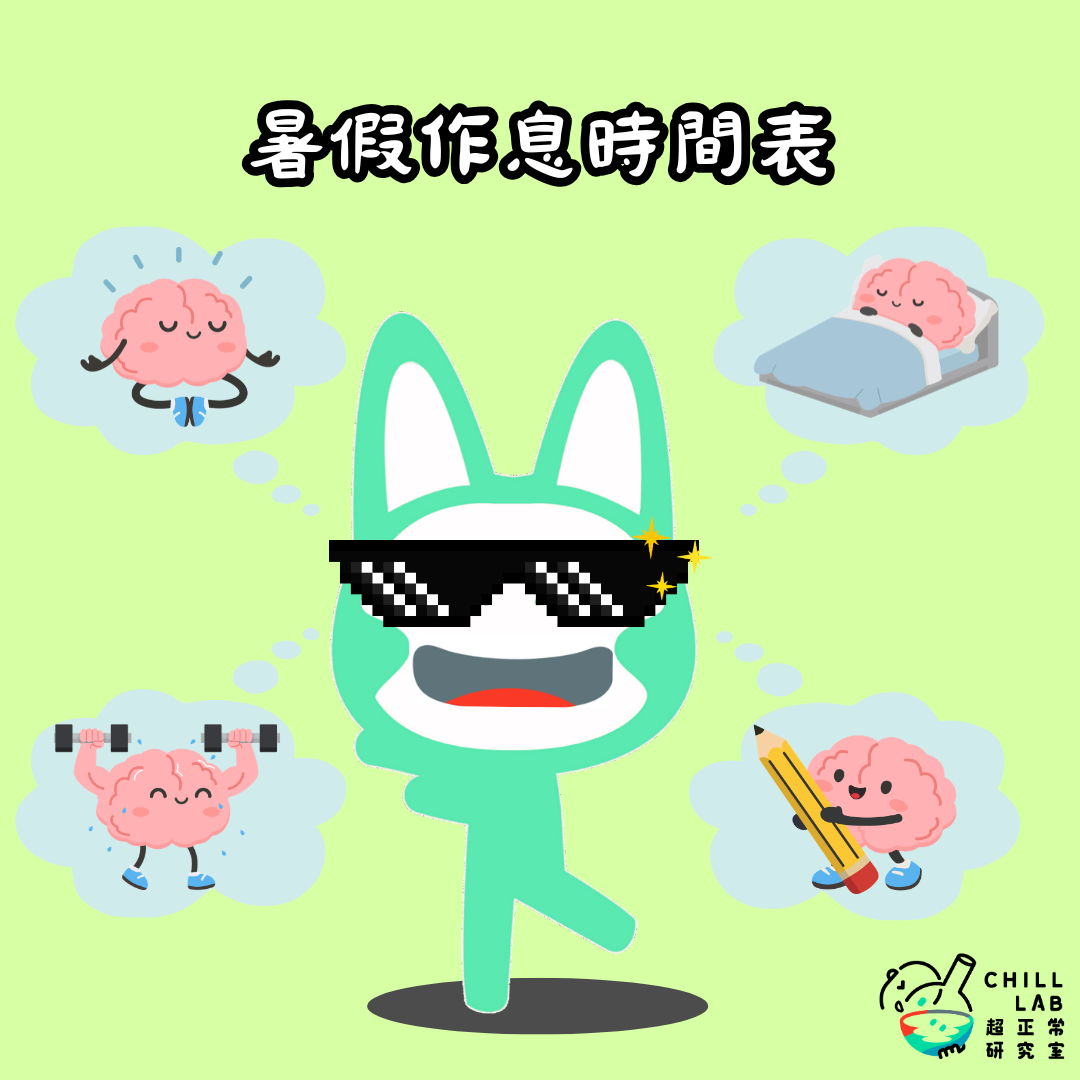
Summer Timetable

Summer is one of the most exciting times of the year for students. It gives everyone a chance to rest, relax, and take a short break from schoolwork, pressure, and worries. However, without proper planning, it is easy for students to become lazy and lose a sense of routine in daily life. In fact, summer is not only a time for rest, but also a chance to improve oneself and develop good habits. Students can create a summer timetable that suits their own needs and find a balance between relaxation and personal growth.

When planning a timetable, students can include study, relaxation, entertainment, and exercise. In the morning, as students are energetic, they can complete their holiday homework or do some reading. In the afternoon, students can take part in physical activities such as exercise or outdoor outings to help both body and mind relax. In the evening, they can set aside personal time or spend time with their family. This not only makes summer more meaningful, but also gives daily life more structure and rhythm.

Of course, a summer timetable does not need to be too strict. Simple and flexible arrangements can be added as needed. There is no single fixed format for a timetable, the most important thing is to create a plan that truly suits yourself and helps keep life balanced.

Summer is not about filling every minute, nor is it about letting time pass by idly. When we learn to find balance between study and relaxation, summer becomes more fulfilling and prepares us for the new school year, helping us move forward more steadily and further.

Rest Is for Going Further

In a society that values efficiency, we often think of “rest” as laziness and see “stopping for a while” as falling behind. Students face pressure from homework, exams, and further studies. Work, family, and responsibilities also chase adults. It seems as if life only needs to slow down one step, and we will lose everything. However, our emotions and bodies need regular care. Otherwise, one day, they may “break down.”

Rest is not running away. It is an ability to take care of ourselves. When we are tired for a long time, our emotions can easily become irritable and low. We may even lose interest in things we used to like. At this time, if we only blame ourselves for “not working hard enough,” the pressure will become even heavier. On the other hand, adequate rest can help our brain organize information, calm our emotions, and help us find the strength to face difficulties again.

For students, rest can be taking a walk after school, listening to music, or talking with friends. For adults, rest does not always mean taking a long holiday. It can be as simple as stopping for a few minutes a day and allowing ourselves to let go of the thought that “I must finish everything.”

A truly mature person is not someone who always forces themselves to keep going. Instead, it is someone who knows when they need to stop. When you feel tired, please do not deny yourself so quickly. You only need to regain your energy. Just like a long-distance runner adjusting their breathing during a race, this is not giving up. It is to run more steadily and go further.

Life is not a short race, but a long road. May we all learn to treat ourselves gently: do our best when we work hard, and rest peacefully when we are tired, because rest can help us move towards a better future with a clearer mind and firmer steps.