





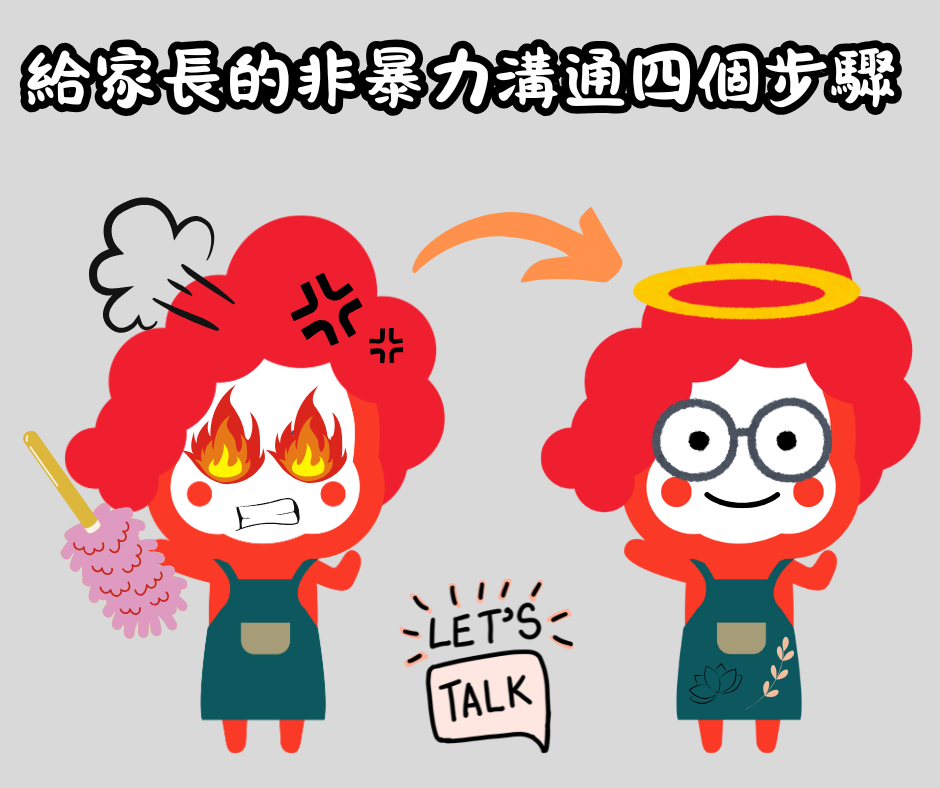
What is Nonviolent Communication?
Nonviolent Communication (NVC), developed by psychologist Marshall Rosenberg, is a way of communicating built on honesty and empathy. It focuses on separating facts from judgments, clearly expressing feelings and needs, and making concrete requests instead of demands. For parents, this reduces everyday conflicts, helps children learn emotional regulation, and strengthens the parent-child bond.
The Four Steps of Nonviolent Communication
Parents can practice these steps step by step:
- Observation: Describe facts objectively, without evaluation. Example: Instead of “You’re always so lazy,” say “I see that after school today you went straight to your phone without doing homework.” Also notice your child’s body language, facial expression, and tone to choose the right moment to talk.
- Feelings: Honestly share your emotions. Example: “When you come home late without letting me know, I feel very worried and anxious.” This shifts focus from blame to your inner experience, reducing defensiveness.
- Needs: Clearly state the need or value behind your feelings. Example: “I need to know you’re safe because your health and well-being are very important to me.” This helps your child understand your care rather than just hearing criticism.
- Request: Make a clear, doable, positive action request (not a demand). Example: “Would you be willing to turn off the computer by 10 p.m. tonight so you can get enough rest?” Use open questions to give your child a sense of choice.
By following these four steps, communication shifts from conflict to mutual respect. Your child feels valued and is more willing to cooperate.
Everyday Tips & Practice
- Empathy / Perspective-taking: When your child is upset, first say, “I can see you’re really frustrated because…”
- Active, focused listening: Pause, listen quietly to the end, understand their feelings before responding.
With regular practice, parents handle emotions more calmly, and children grow up in a nonviolent, respectful environment.